

Timing Your Fly Fishing for Bonefish & Giant Trevally on Christmas Island
Kiritimati, better known as Christmas Island (or CXI to fly anglers), offers consistently productive fishing year-round. Air temperatures rarely drift outside the low-to-upper 80s°F (27°C), and the water in the lagoon sits comfortably between the high 60s and about 80°F (16-27°C).
While conditions are almost always inviting, a few subtle factors – tides, moon phases, time of day, and wind direction can all make a big difference if you want to maximize your chances.
Bonefish: Timing Is Everything
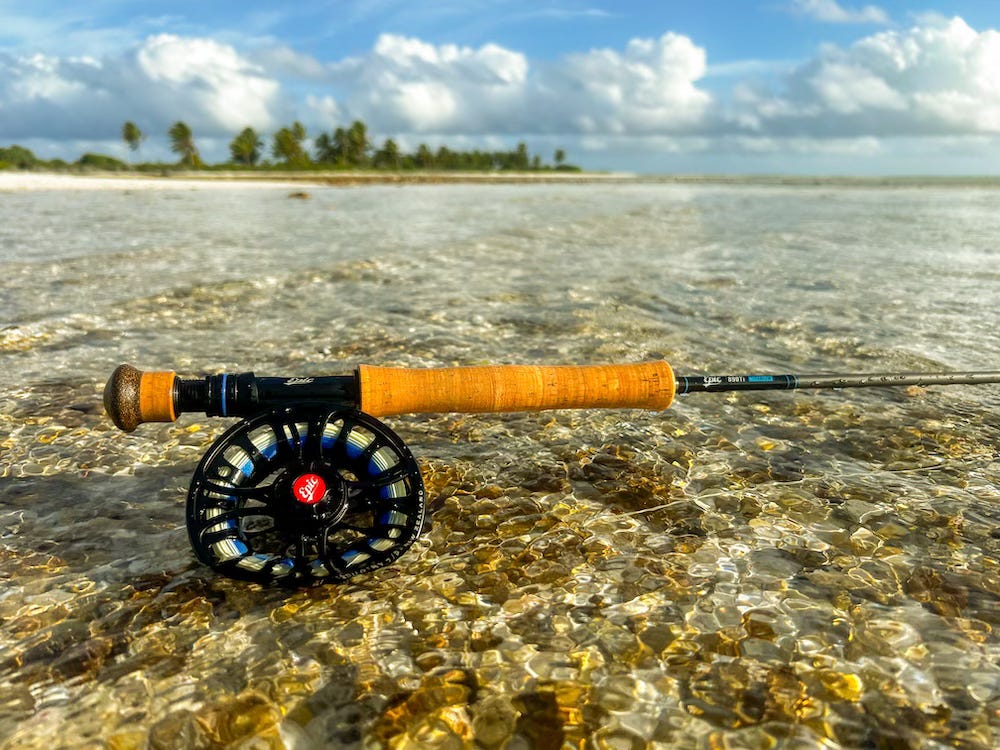
Bonefish tend to be most active when lagoon temperatures hover near 78°F (25-26°C). They feed best on incoming tides, particularly when that rising water coincides with mid-morning, which often happens a few days after the quarter moon. These mornings are a gift to any anglers who struggle with spotting fish, as light and water depth align to make them much more visible.
On neap tides, when water levels are neither excessively high nor low, you can cover flats all day without worrying about dry spots or milky, stirred-up water. Neaps are also prime for ocean-side bonefishing, especially along the 40-mile stretch from Southeast Point to Benson Point, where bonefish and smaller trevally cruise the reef edge.
As an aside, Benson Point, situated on the southern peninsula of Kiritimati Island, holds historical significance as the site where Frenchman Emmanuel Rougier, a French priest and plantation manager, established a settlement and planted numerous coconut trees in the early 20th century. Rougier named the settlement ‘Paris’, which remains a notable landmark on the island.
You’ll know the inside of Benson Point as Paris Flats. Ask your boatman to grab you a couple of coconuts from here while you’re fishing the flats (top up their tip to acknowledge the extra effort). They’ll cut them ready for you to drink when you get back, hot and thirsty, to the boat.
During full moons, bonefish often feed at night, meaning they’re less eager in the mornings and tend to be more active in the afternoons. You can still find early risers, but the bite often only lasts an hour on shallow flats. New moons produce excellent feeding windows too, though, like the full moon period, daytime fishing time is shorter, with only a handful of peak hours split between morning and afternoon.
Giant Trevally: Big Fish, Big Tides
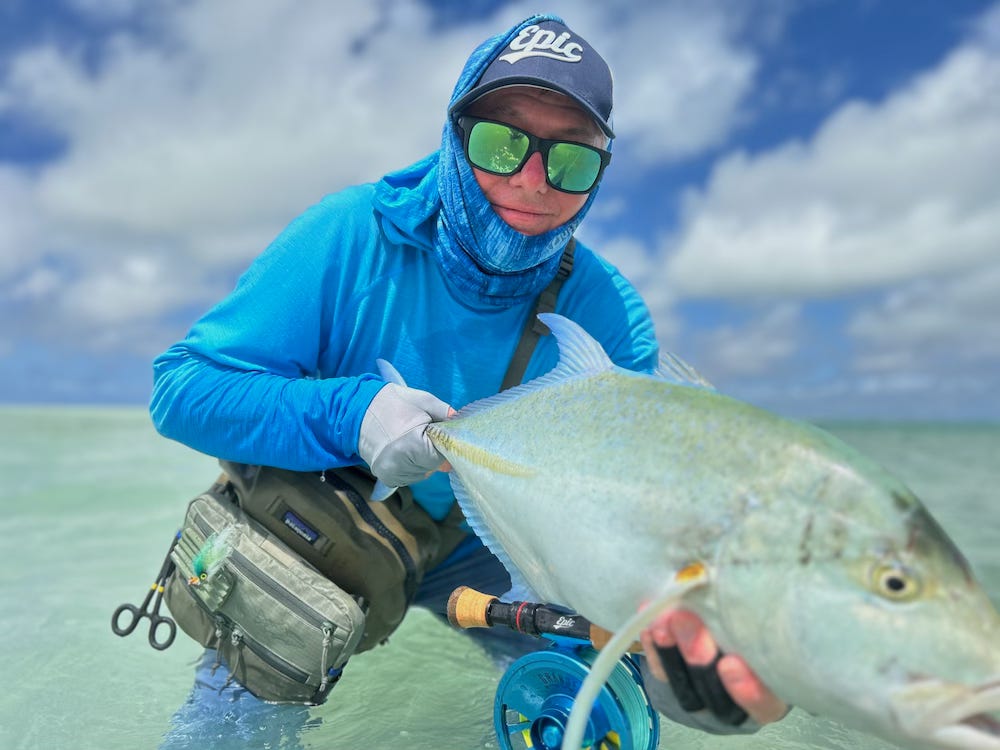
For GTs, the best action comes on high tides, especially in the early mornings and late afternoons. Spring tides – those around the new and full moon – are particularly productive. Not only do more GTs move across the flats during these periods, but the chances of encountering them skyrocket. On a strong spring tide cycle, you could easily get over a dozen quality opportunities in a single day.
A hybrid approach works well if you’re targeting both species: chase GTs in the morning while the tide is high, then switch to bonefish in the afternoon as the water begins to rise again.
Giant Trevally Behavior and Tidal Patterns on Christmas Island
Giant Trevally are most active on the flats during high tides, especially in the early mornings and late afternoons when feeding opportunities peak. Their movements closely follow the lunar cycle and the resulting tidal changes.
Christmas Island experiences spring tides – when the moon is full or new – with the highest tidal range reaching just over 1.2 meters (4 feet) at peak, and the lowest spring tides dropping to about 0.2 meters (half a foot). During these periods, the flats flood extensively, allowing GTs to roam farther and access more feeding grounds.
Neap tides occur during the moon's quarters, producing gentler tidal changes. The highest neap tides typically reach around 1 meter (~3 feet), while the lowest drop to approximately half a meter (1.5 feet). These more moderate water levels mean the flats hold water consistently throughout the day, offering bonefish ideal feeding conditions but limiting the expansive hunting range of the GT.
For anglers, understanding these tidal nuances is key. The spring tides provide prime opportunities for targeting GT, offering multiple high tide windows in the early and late parts of the day. Conversely, neap tides create steadier, more transparent flats that are perfect for sight fishing bonefish but less optimal for large GT movement.
If you have a good guide (ask us for guide recommendations), they will put you onto some GT spots that you would never locate on your own. And they’ll go the extra mile to stir up some bluefin trevally & GT action as the tides come up.
Reading the Conditions
Start with the sun at your back. Christmas Island’s winds blow predominantly from the east, so plan to fish those flats that allow you to fish from their eastern ends toward the west in the mornings. Then in the afternoons, sun and wind tend to be in opposition, so position yourself to sight-fish toward the southwest or northwest, where glare is reduced.
In short, while you can catch fish here any week of the year, matching your trip dates to the tides and moon phases can give you a clear edge, especially if your goal is to combine big GTs with epic bonefish sessions.
Insider’s Notes: Fine-Tuning Your Christmas Island Trip
Neap Tides for Bonefish - Steady water levels and clearer flats make these ideal for sight-fishing all day.
Spring Tides for GTs – Around new and full moons, expect far more giant trevally encounters, especially on the high tides at dawn and dusk.
Moon-Phase Sweet Spots – The three days before and after a full moon can see bonefish schooled up and feeding aggressively.
Fall Advantage – September through November often brings stable weather, clearer water, and fewer anglers.
Start with the sun at your back – Fish the morning flats that offer you east to west wading. You’ll spot more fish and have any morning breeze behind you.
Don’t let those Triggers get you down – cast well to one side and well beyond your target triggerfish. This gives you a greater chance of them seeing the fly without it first spooking them. Don’t be in a hurry to rush the fly back. Mix up your retrieval technique, and don’t worry when you haven’t landed one for the day. That’s fairly typical!
Fanning Island Lodge
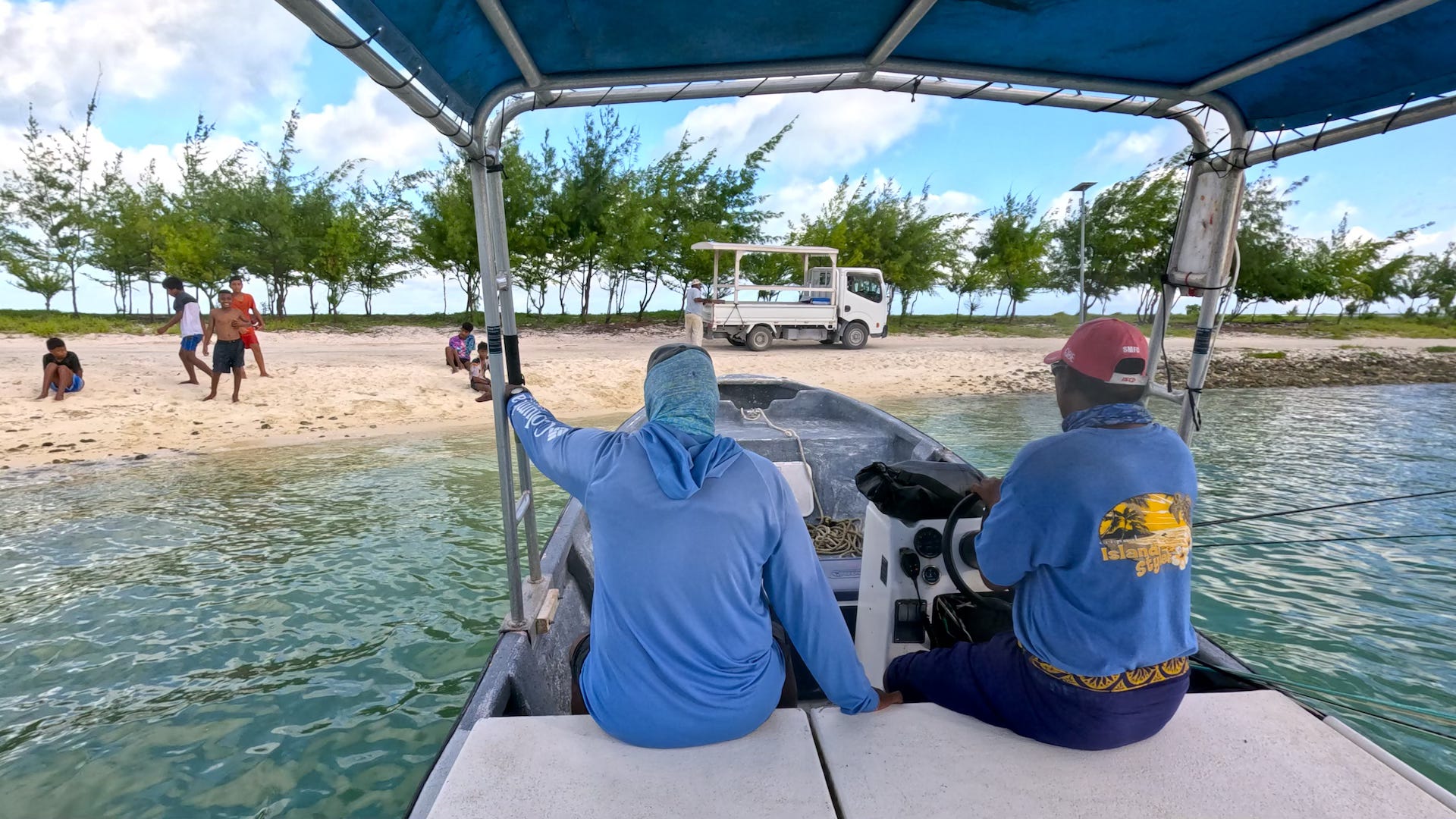
You’re only an hour from Fanning Island Lodge and some seriously fun remote atoll action. There are flights to/from Fanning Island on Thursdays (the day after you arrive onto Christmas Island) and also Tuesdays (the day before your scheduled flight back to Honolulu).
This allows you to spend one week on Christmas Island and a second week on Fanning to maximize your flight costs and transfers from Mainland USA to CXI.
For more on Fanning Island, read our article, or talk to the team at Isolation Outfitters who book anglers into Fanning Island Lodge.
For further reading …

Solid advice applicable to Fanning Island also.